

The Coverage Corner
Speed Cameras vs. Flock Cameras:
What’s the Difference, and Why Is Everyone Talking About This?
The Coverage Corner, In our last issue, we covered Connecticut’s new automated speed cameras, the ones that catch drivers going 10+ mph over the limit in school zones and highway work zones. Since then, a much bigger and louder debate has broken out across the state, and it’s easy to see why people are lumping the two technologies together. They’re not the same thing, and the difference matters.
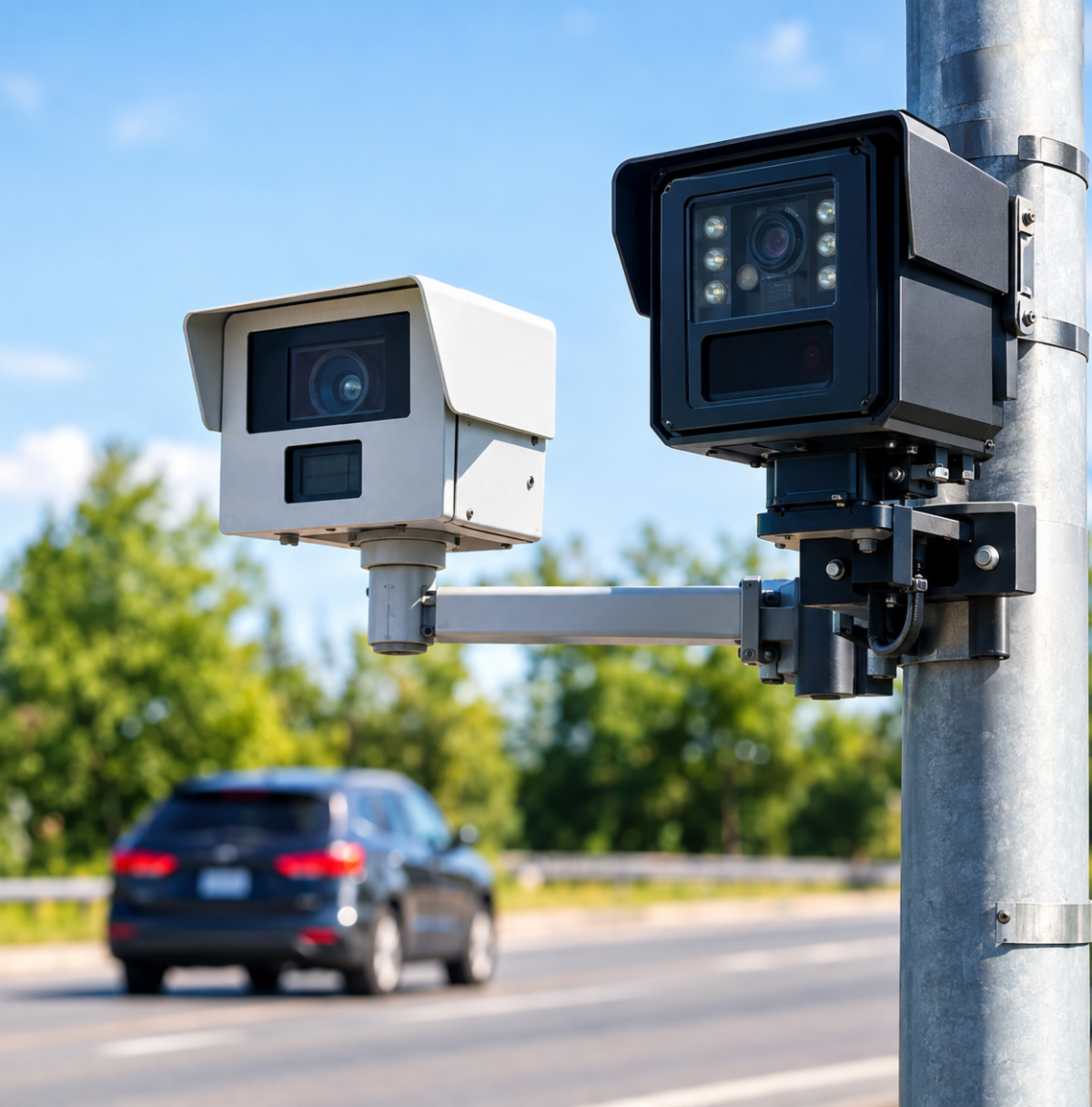
Connecticut’s new cameras are making headlines, but they’re not the same. Here’s a quick, easy breakdown of what each one does and why it matters.
Connecticut’s camera debate involves two very different technologies.
- Measure how fast a vehicle is moving.
- Used in specific posted zones.
- Can issue a citation for qualifying speeding violations.
- Focus: Traffic enforcement.
- Read and photograph license plates.
- Record plate, time, and location information.
- Can be searched later during investigations.
- Focus: Identification and investigations.
WHY PEOPLE HAVE CONCERNS
- Flock cameras can record vehicles even when no violation occurs.
- Residents have raised questions about data access, sharing, and retention.
- Some Connecticut communities have held public hearings or reconsidered their cameras.
WHY TOWNS SUPPORT THEM
- Police departments say ALPRs can help locate stolen vehicles and missing people.
- They can provide investigative leads after a crime.
- School-bus camera programs are intended to document illegal passing of stopped buses.
THE SIMPLE VERSION: Speed cameras focus on how fast you are going. Flock cameras focus on identifying vehicles.
WHERE THINGS STAND
Connecticut is developing statewide guidance on how ALPR data is retained, accessed, and used. Rules around data sharing continue to change, making this a fast-moving issue, while towns may continue to review whether to install, keep, or remove these systems.
The Bottom Line for Drivers
Neither camera type currently adds points to your license or is reported to your auto insurer the way a police-issued moving violation can. The rules around camera use and data are still evolving.

Paul Walsh
Partner
Office 203.810.4400 ext. 112

Alex Horton
Partner
Office 203.810.4400 ext. 112
